
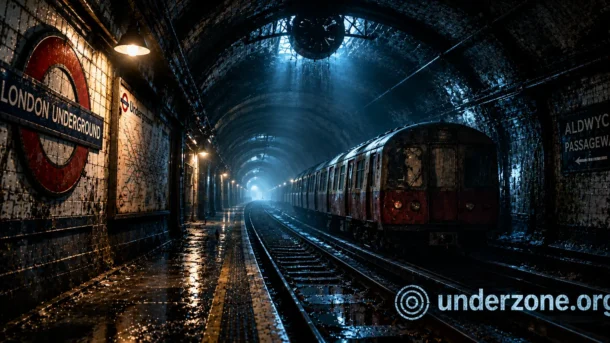
Beneath the busy streets of London, there was once a railway that carried millions of letters every day.
It had tunnels, stations, electric trains and an underground control system. But there was one unusual detail: ordinary passengers were never allowed on board.
This was the Mail Rail, one of London’s most overlooked engineering projects.
A railway built for letters
At the beginning of the twentieth century, London’s streets were becoming increasingly congested. Moving enormous quantities of mail between railway stations and sorting offices by road was slow and inefficient.
The solution was ambitious: build a railway underneath the city, dedicated entirely to transporting post.
The project was authorised in 1913, and the railway finally opened in December 1927. Its route stretched approximately six and a half miles, connecting major postal facilities across London.
Instead of conventional passenger trains, the system used small electric vehicles that operated without drivers.
Millions of letters underground
Mail Rail became an important part of London’s postal network.
At its peak, more than four million letters travelled through its underground tunnels every day.
The system continued operating through decades of change, including the Second World War. While London changed above ground, this hidden railway kept moving the city’s messages below it.
But technology and postal habits eventually changed. Road transport became more economical, mail volumes declined, and the underground network became increasingly expensive to maintain.
In May 2003, after 76 years of operation, the railway carried its final mail.
The infrastructure we forget
Mail Rail was not designed to impress the public. It was built to solve a practical problem, and for decades it did exactly that.
Yet its story reveals something interesting about modern cities: some of their most important systems are almost invisible to the people who depend on them.
We notice the letter arriving. We rarely think about the machinery, tunnels and engineering that once made its journey possible.
Under London’s streets, an entire railway existed for something as ordinary as delivering a message.
And for 76 years, it did its work without carrying a single passenger.